Technique & basics
Combining herbs and spices: a beginner's guide
3 min read
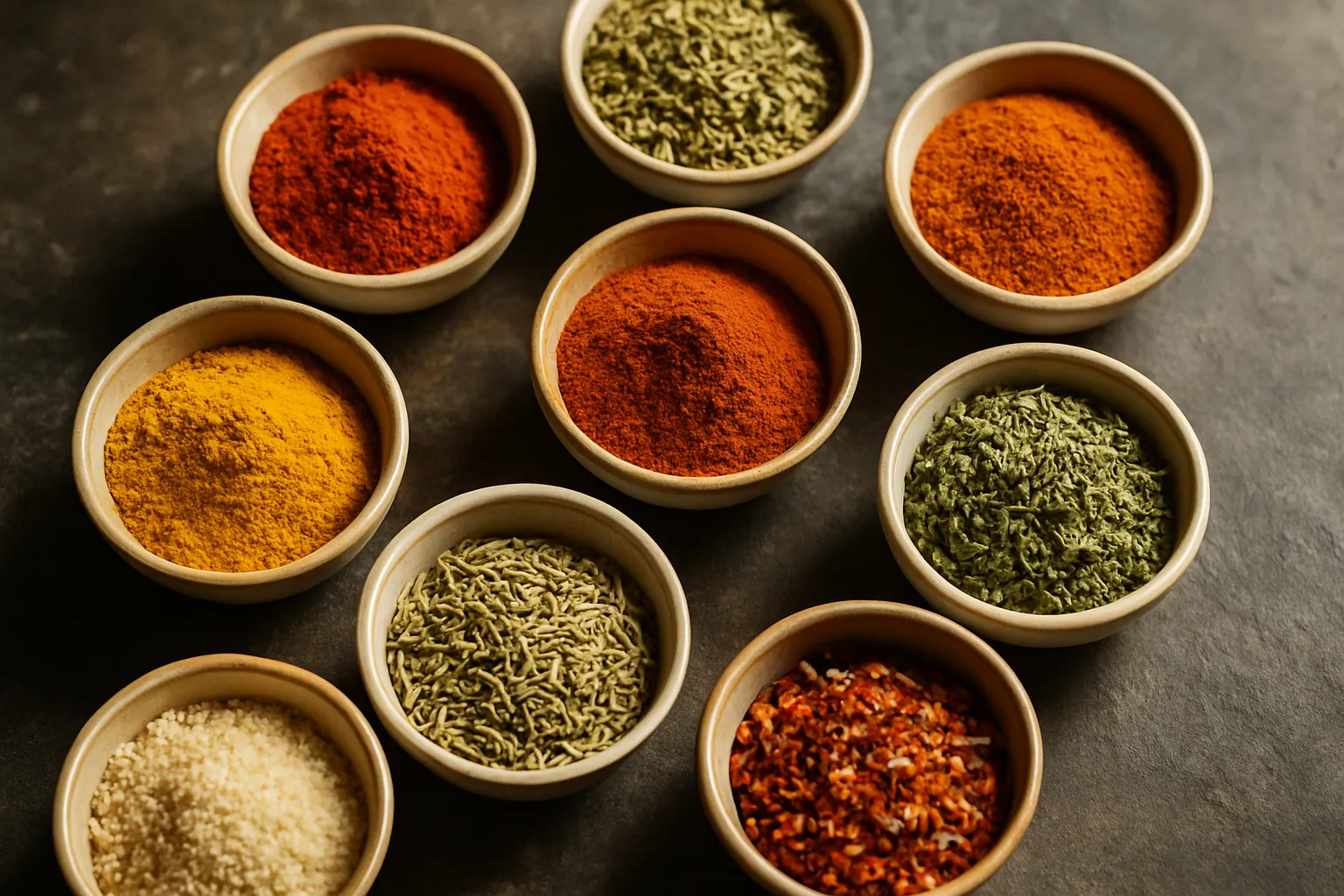
For many home cooks, the spice rack is a collection of loose guesses: jars bought for a single recipe, and beyond that the eternal question of whether cumin actually goes with paprika. The good news is that everyday spice knowledge does not require an encyclopedia. Know a handful of families and two basic rules, and you can season almost anything with confidence.
Think in families, not in jars
Most of the world's cuisines revolve around a recognisable core of three to five flavourings. Know the core, and you can combine within that family almost blindly:
- Mediterranean: garlic, thyme, rosemary, oregano, bay, lemon. At home with tomato, olive oil, lamb, chicken and roasted vegetables.
- French classic: thyme, bay, parsley, tarragon, shallot, mustard. The foundation under stews and creamy sauces.
- Middle Eastern: cumin, coriander seed, cinnamon, allspice, mint, lemon. Beautiful with minced lamb, aubergine, chickpeas and yoghurt.
- Indian: cumin, turmeric, coriander seed, ginger, cardamom, garam masala. The family of dal, curries and roasted cauliflower.
- East Asian: ginger, garlic, spring onion, soy sauce, sesame, rice vinegar. Stir-fries, marinades, noodles.
- Mexican/Latin: cumin, oregano, smoked paprika, chilli, lime, fresh coriander. Beans, minced meat, corn, tomato.
Two things stand out. First: some seasonings (cumin, garlic, coriander) are world travellers appearing in several families; those are your safest cards. Second: every family includes an acid (lemon, lime, vinegar) and often a fresh finisher. They belong to the family as much as the spices do.
The practical rule: stay within one family and it almost always works. The failed experiments usually come from mixing families without a plan; garam masala in the pasta sauce is a gamble, oregano is not.
Dried early, fresh late
The second basic rule is about timing. Dried herbs and ground spices need fat and heat to release their flavour: fry them briefly with the onions or at the start of the sauce. A minute in oil does more than ten minutes simmering in liquid; too long on high heat turns them bitter instead (paprika and garlic powder burn especially fast).
Fresh soft herbs (basil, coriander, parsley, mint, dill) are the opposite: heat destroys them. They go in at the very end or raw on top. Fresh woody herbs (rosemary, thyme, bay, sage) sit in between and can happily stew along.
Combine these two rules and recipes suddenly read differently: you recognise why the cumin joins the onions and the coriander only appears on the plate.
Dosing without measuring spoons
Beginners under-season; experienced cooks taste. The workable middle: start with half a teaspoon of a dried spice per two people, taste halfway and double without fear if it tastes flat. Spices also lose strength quickly: a three-year-old jar of ground cumin is mostly coloured dust. Buy small, replace yearly, and sniff the jar before use; if you smell nothing, you will taste nothing.
One warning for the heavyweights: clove, cinnamon (in savoury dishes), smoked paprika and dried bay can take over a dish single-handedly. Start those at a quarter teaspoon or a single leaf, whatever the recipe says.
One more dosing detail that saves confusion: dried is more concentrated than fresh. If a recipe calls for a tablespoon of fresh thyme and you only have dried, use about a third. The other way round, be generous with fresh: a handful of fresh parsley is rarely too much, a handful of dried always is.
Learn from your own dishes
The fastest school is not reading more recipes but remembering your own seasoning choices. Seasoned the roasted cauliflower with cumin and lemon and loved it? Write it into the recipe. Was the stew flat until a bay leaf saved it? Note it. Within a year you build personal seasoning knowledge fitted exactly to what you cook, and that is worth more than any table, including the one above. The families are the starting point; your notes are the destination.