Technique & basics
Mise en place: why calm cooks prep everything first
3 min read
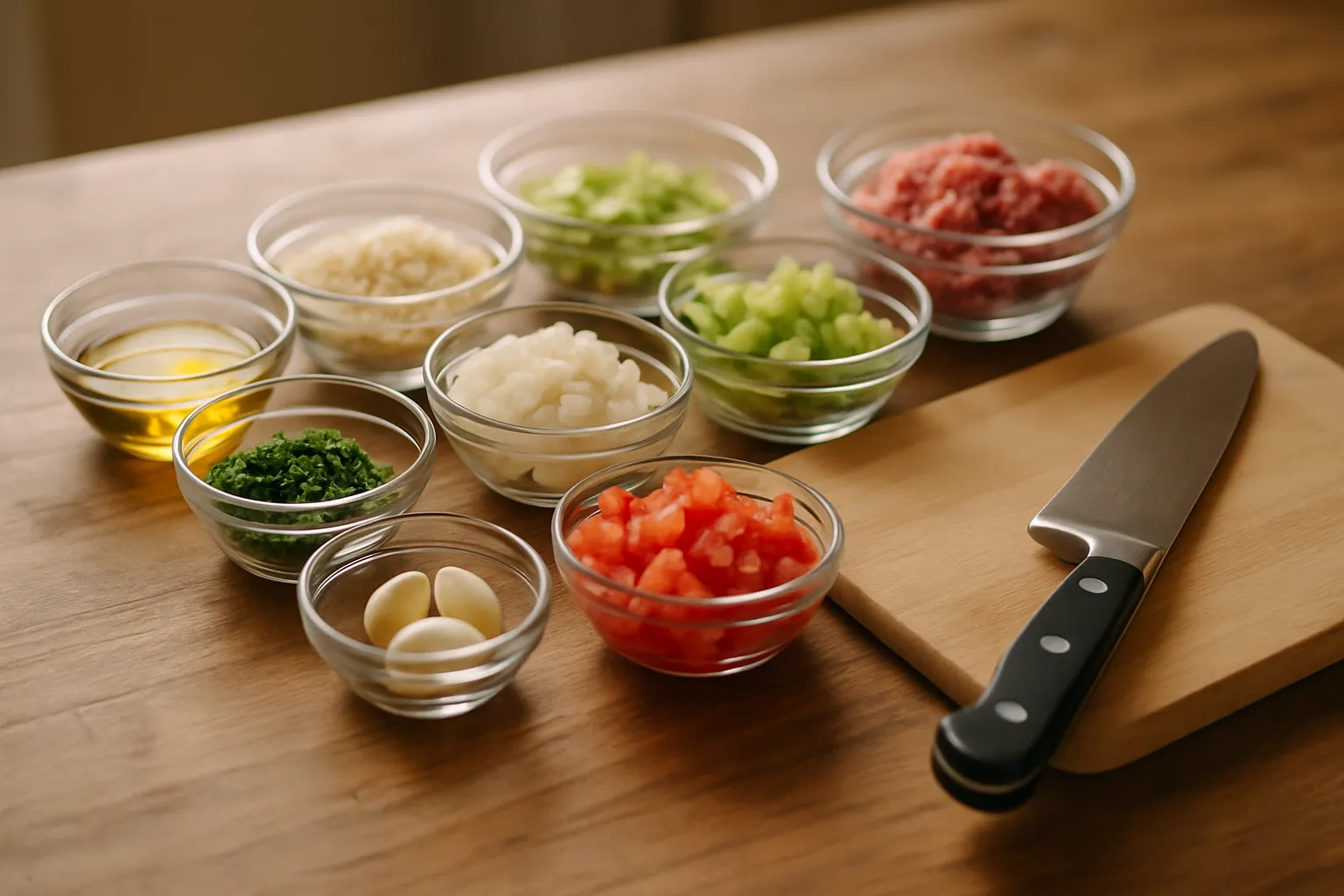
In every professional kitchen the day starts the same way: hours before the first guest orders, every ingredient is cut, weighed and within arm's reach. Mise en place, "everything in its place". It is not perfectionism; it is the reason a cook can send out twelve dishes at once during the rush without searching for anything even once.
At home we usually cook exactly the other way round: we start frying and cut the rest "as we go". And that, far more often than the recipe or our skill, is the source of kitchen stress.
What goes wrong without it
Everyone knows the pattern. The onion is in the pan, the recipe says "add the garlic", and then it starts: peeling garlic while the onion is already colouring, hastily dicing the pepper that should have been ready five minutes ago, meanwhile your free hand hunting for the paprika that turns out to be at the back of the cupboard. The onion does not burn because you cannot cook, but because you were doing two jobs at once: preparing and cooking.
Those two jobs run at different speeds. Preparing may be slow and interrupted; cooking has moments where twenty seconds decide the outcome. Mixing them lets the slow work sabotage the fast work, and that is the frantic feeling.
What you gain
Decouple the two and something odd happens: the same recipe becomes easier and better. Easier, because cooking is reduced to one task: putting things in the pan at the right moment and paying attention. Better, for three concrete reasons:
- Timing works. The garlic goes in when the onion is ready, not when you finish peeling. In stir-fries and pan sauces, where everything happens in minutes, this is the entire difference.
- You read the recipe fully one more time. During mise en place you discover that the tofu needs thirty minutes of marinating or that the oven should already be hot, now, rather than at the moment it is too late.
- Mistakes surface early. No lemon in the house becomes apparent during prep, when everything is still fixable, not when the fish is already in the pan.
How to do it at home, without twelve little bowls
The restaurant image of rows of steel containers puts people off, understandably: at home the washing-up from twelve bowls is a real objection. The domestic version is more pragmatic:
- Read the recipe once from start to finish, including the final step.
- Put every ingredient on the counter. This alone prevents half of the searching.
- Cut and weigh everything needed for the first, fast phase of cooking. Group what goes into the pan together on one plate or board; three things that get fried together do not need three bowls.
- Anything needed only after a long stewing or oven stage can happily be prepped during that waiting time. Mise en place does not mean "everything upfront", it means "everything before the moment it has to go fast".
- Clear the cutting mess before you turn on the heat. An empty worktop during cooking is half the calm.
For dishes with a long, gentle run-up (a soup that simmers for an hour, a stew), full mise en place is overkill; steps 1 and 2 are enough. Save the full treatment for recipes where much happens in quick succession: wok dishes, risotto, pasta sauces that are ready when the pasta is.
It is also simply more pleasant
There is one more reason this works, and no cookbook mentions it: separated prep turns the cutting into a calm ritual instead of a race. Music on, no time pressure, and by the time the heat goes on, the most exciting part has already happened. Many people who say they find cooking stressful actually find the cutting-in-between stressful; the cooking itself, with everything within reach, suddenly turns out to be the enjoyable part. Start every meal for one week with five minutes of mise en place, and you will not want to go back.