Adapting recipes
Make any recipe vegetarian without losing flavour
3 min read
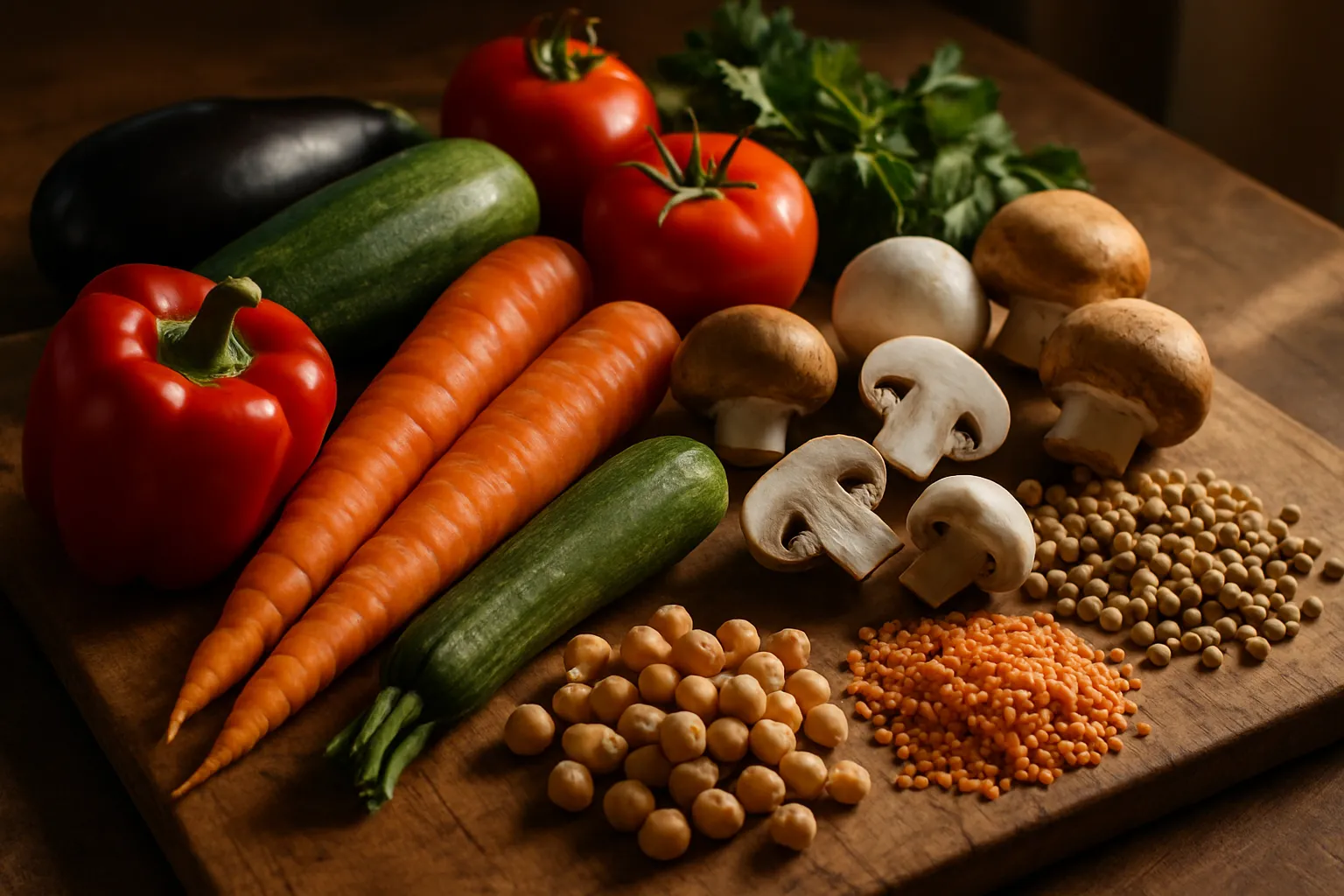
The disappointing vegetarian meal is almost always made the same way: take the original recipe, leave out the meat, done. What remains is a dish with a hole in it. Not because meat is irreplaceable, but because in the original it held three jobs at once: it brought savouriness (umami), it brought bite, and it brought substance. To make a recipe properly vegetarian, you refill those three jobs one by one.
Job one: savouriness
Umami, the savoury fifth taste, is what makes a dish taste "full". Meat and meat stock deliver plenty of it; fortunately umami is anything but exclusive to meat. The strongest plant-based sources:
- Dried mushrooms. A few dried shiitakes or porcini, soaked and chopped (soaking liquid into the pan too), give a stew or sauce instant depth.
- Tomato purée, briefly fried until it darkens. The Maillard reaction does the same work here as searing does.
- Soy sauce and miso. A tablespoon of soy in a tomato sauce or a teaspoon of miso in a soup does not read as "Asian", it reads as "more".
- Aged cheese, and especially the rind of a piece of Parmesan: let it simmer along in soup or sauce.
- Fermented and smoked: smoked paprika, chipotle, black garlic, olives, capers.
Pick one or two per dish; this is seasoning, not stacking.
Job two: bite
The second loss is texture. A chilli without mince is missing not just flavour but something to chew. Substitutes work best chosen for the texture of the original, not for the idea of "meat substitute":
- Mince-like: finely chopped mushrooms (fried hard), lentils, bulgur, or walnuts with mushrooms pulsed in a food processor.
- Chunks and cubes: chickpeas, firm tofu (patted dry and fried crisp), tempeh, aubergine.
- Shreddy, for pulled-style dishes: jackfruit or slow-cooked mushrooms.
An important detail: give the substitute the same treatment the meat received. Was the mince browned first with the spices? Then brown your lentil-mushroom mixture first too, instead of stewing it in raw. The cooking steps carry at least as much flavour as the ingredient itself.
Job three: substance
Meat provides protein and satiety; a vegetarian version that only adds vegetables leaves you hungry an hour after dinner. Pulses are the standard answer here (lentils, beans, chickpeas), alongside eggs, dairy, nuts and whole grains. Often the simplest intervention is: double the pulses compared to what your instinct says.
Watch for the hidden non-vegetarian ingredients
When cooking for guests, be sharp on the small print. Stock cubes are often meat-based (vegetable stock is the easy swap), fish sauce is standard in many Thai recipes (replace with soy sauce plus a pinch of salt, or vegetarian fish sauce), Worcestershire sauce contains anchovies, and many traditionally made hard cheeses, Parmesan included, use animal rennet. Decent vegetarian alternatives exist for nearly all of these; the point is simply knowing.
Method: rebuild one thing at a time
The trap when vegetarianising a beloved recipe is changing everything at once. On the first attempt, replace only the meat and the stock, taste, and note what you miss: was it savouriness, bite or substance? Next time, address exactly that. After two or three rounds you have a version that stands on its own feet.
And actually record that version, as a variant next to the original rather than over it. That way you can go both directions for a mixed table, and you can still see later what you changed. This is exactly the kind of work where a digital cookbook proves itself: in Recettino you can ask for a vegetarian variant of any recipe and save it as a new version, with the original safely alongside.
The best outcome, by the way, is not "just as good as with meat". That is the substitute's bar. The real bar: a dish where nobody at the table wonders what was left out, because what is in it makes sense.