Meal planning
Leftovers: from sad container to new meal
3 min read
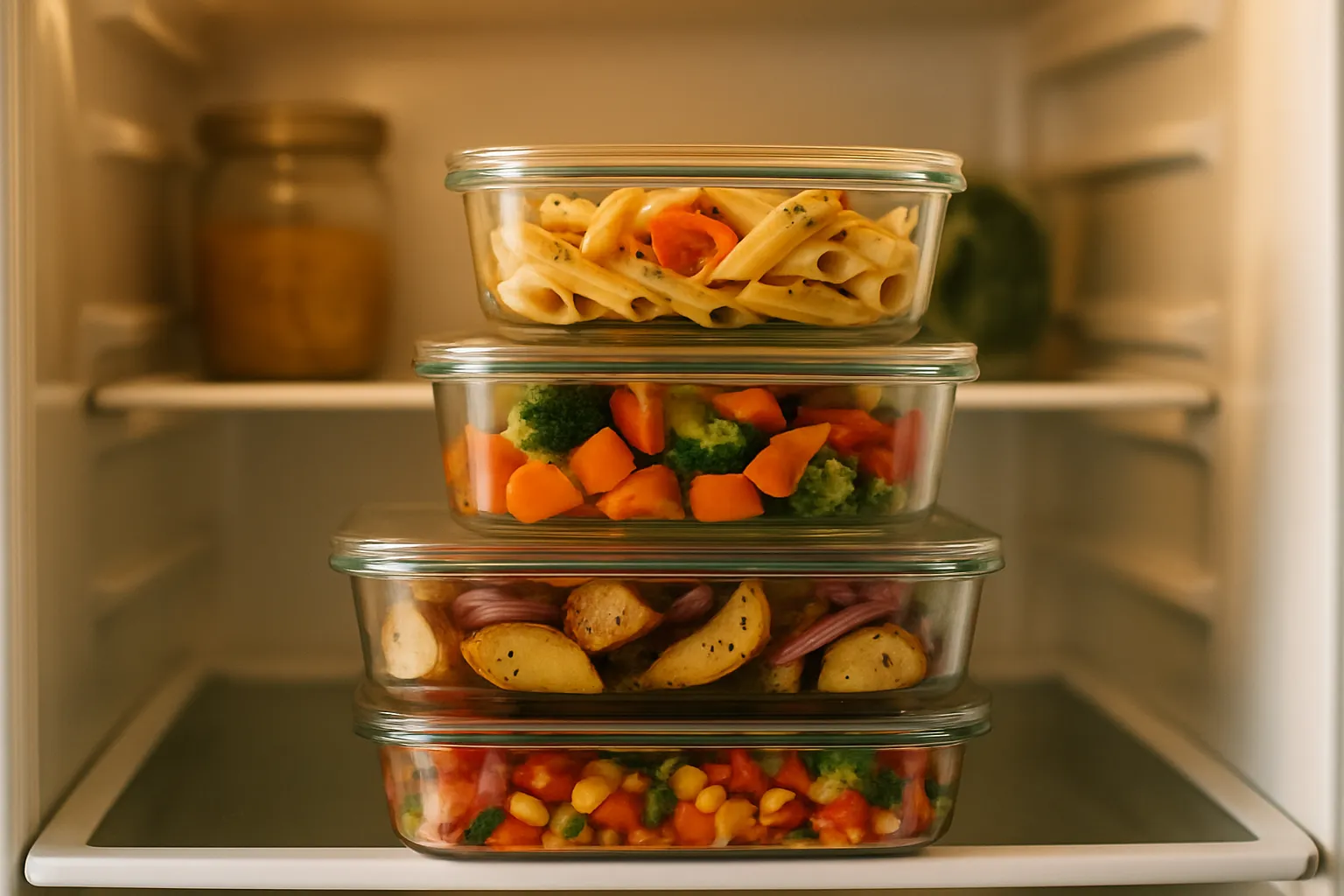
There are two kinds of households: those where leftovers are an obligation grudgingly worked through on Wednesdays, and those where leftovers are the start of the easiest meal of the week. The difference is not the leftovers but the mindset. If you see a container as "yesterday, but worse", you reheat. If you see it as an ingredient that happens to be already cooked, you cook with it.
Think in building blocks, not dishes
The key is to break a leftover down to what it factually is. Half a bowl of pasta with tomato sauce is not "old pasta": it is cooked pasta plus a seasoned sauce. Leftover roasted vegetables are not "the rest of the traybake": they are cooked vegetables with roasty flavour. Once you look at it that way, a set of standard routes opens up:
- Anything cooked and savoury can become a frittata. Four eggs, leftover folded in, ten minutes in a covered pan. Works with pasta, potato, vegetables and rice.
- Almost anything can become soup. Leftover vegetables plus stock plus a stick blender is a hearty soup; a remnant of rice or pasta makes it filling.
- Yesterday's rice is better for fried rice than fresh. Cold, drier rice fries loose and grainy; fresh rice turns gluey.
- Stews and curries become wraps. A remnant of chilli, curry or braised meat, drained and slightly reduced, is a filling you will be glad about a day later.
- Stale bread is a raw material. Croutons, panzanella, French toast or breadcrumbs: throwing away bread means throwing away some of the best by-products in the kitchen.
Know these five routes and you can give a second life to eighty percent of common leftovers without ever opening a recipe.
The formula: leftover + something = meal
Often the leftover is too small for a whole meal. Then this formula works: leftover + fresh base + something bright. The fresh base is cheap and filling (rice, a fried egg, bread, salad leaves); the bright element (lemon, vinegar, fresh herbs, yoghurt) lifts the dish out of reheat territory. A remnant of roasted cauliflower becomes, with couscous and a lemon-yoghurt dressing, a new dish rather than a rerun.
That bright element is not a detail. Reheated food tastes flatter because aromas fade; acid and freshness compensate exactly that. It is the same reason seasoning at the end makes such a difference.
Plan the leftover night in advance
Within a weekly plan it works well to treat leftovers not as an accident but as a scheduled night. Deliberately cook one and a half portions on Monday, and Thursday is "leftover night" without surprise or disappointment. Plan your leftovers and you throw away less and have one less dinner to invent.
A helpful companion habit: keep track of what is still around. That can be a note on the fridge; it can also be searching your recipe app for the ingredient that needs using. "What can I make with leftover chicken and half a leek?" is precisely what a searchable cookbook exists for.
Safety, briefly and without panic
Using leftovers is safe if you keep to a few basics. Do not leave food out of the fridge for more than two hours; cool leftovers quickly and store them covered. Most cooked remnants keep two days in the fridge, rice preferably just one (and reheat it properly hot). Reheat until steaming, not lukewarm. And the most important rule is the simplest: if smell or appearance is in doubt, do not taste, discard. One binned container is no tragedy; the pattern is what counts.
Start with your most expensive leftover
Do not try to change everything at once. Pick the leftover you currently throw away most often, usually cooked vegetables or half a pan of rice, and give it one fixed second destination from the lists above. Once that is habit, take on the next one. Within a few months the question shifts from "do we still have to eat this?" to "what shall we make of it?", and that shift is the whole point.