Cookbook & organisation
From camera roll to a cookbook you can actually use
4 min read
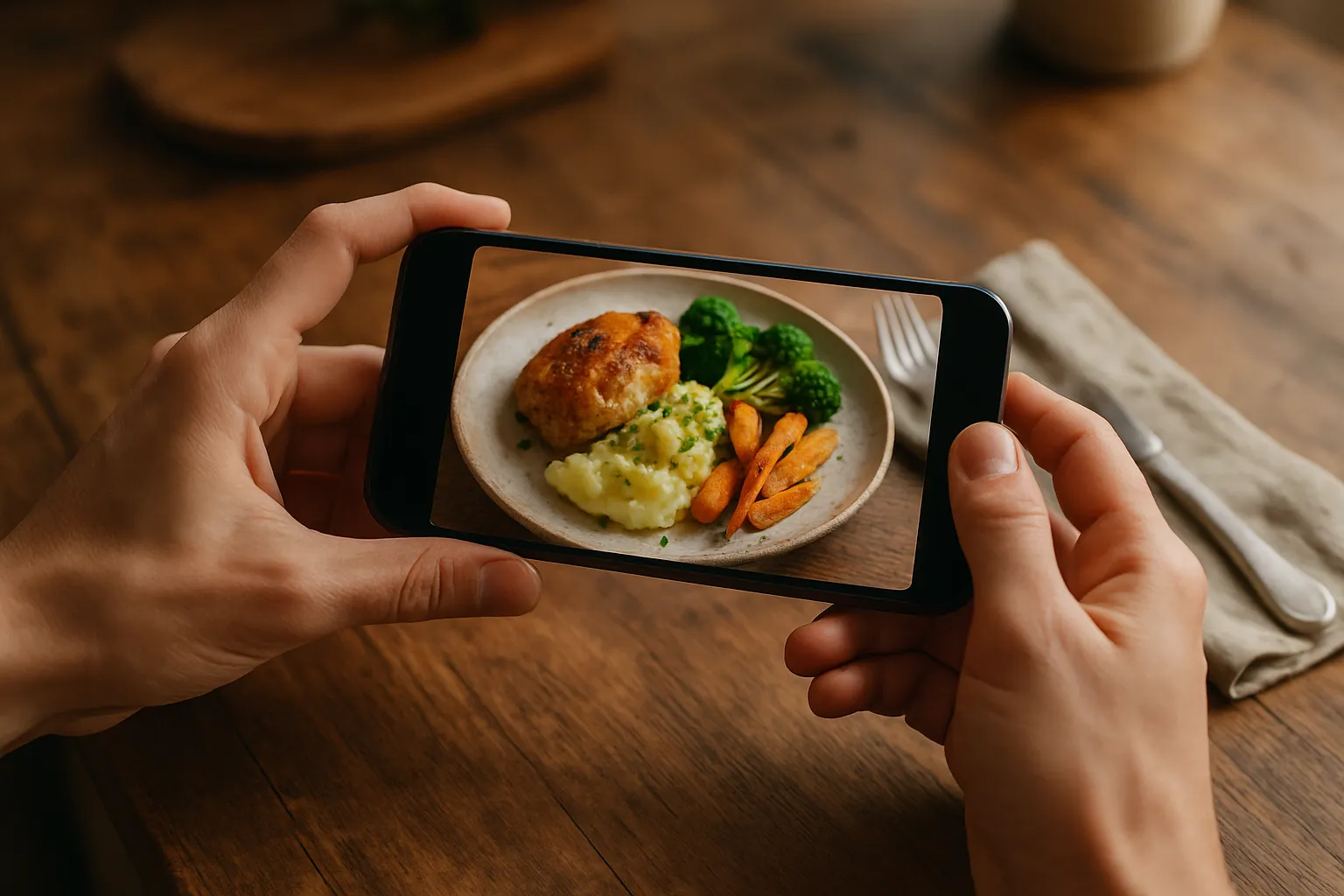
Everyone who loves cooking knows the pattern. You spot a dish in a magazine at the hairdresser's: photo. Your mother-in-law makes a fantastic curry and the recipe lives on a crumpled sheet of paper: photo. Instagram, a cookbook in a shop, a restaurant menu with the ingredients listed: photo, photo, photo. Two years later there are four hundred recipe photos scattered between your holiday pictures, and you have never once found the right one while actually standing at the stove.
The problem is not that you save too much. The problem is that a camera roll has no structure that has anything to do with cooking. You cannot search it by ingredient, you cannot filter for "quick weeknight dinner", and that one pasta photo happens to sit between thirty shots of a birthday party. Saving has become effortless; finding things again is the real work.
Start by culling, not by organising
The temptation is to invent folders and categories straight away. Hold off on that. First scroll through your camera roll once and ask a single question per recipe photo: would I still want to cook this today? Be strict. The cake for a party that has long passed, the dish with an ingredient you cannot get anywhere, the fifth variation on the same leftover curry: let them go, or at least do not take them to the next round.
From experience: out of every hundred saved recipe photos, twenty to thirty survive an honest cull. That is not a loss, it is a gain. A collection you can actually see through is worth more than an archive that contains everything.
Turn each photo into a real recipe
A photo of a recipe is not yet a recipe. You cannot adjust it, cannot scale it to six people, and in five years the photo is grainy and the context is gone. So the next step is typing it out or digitising it, and this is exactly where most people give up, because nobody is going to transcribe four hundred photos.
That is why the cull matters so much: transferring twenty recipes is a couple of evenings, not a life project. There are also apps that take most of this work off your hands. In Recettino, for instance, you upload the photo and the text is automatically turned into a structured recipe with ingredients and steps, which you can then scale and adapt. But even without an app the rule holds: better twenty searchable recipes than four hundred photos.
While transferring, take a moment for two things. First: give the recipe a name you would actually search for later. "Marie's pasta" will never be found again; "creamy pasta with peas and lemon" will. Second: note the source. Three years from now you will want to know whether this came from that one cookbook or that website, if only to find more like it.
Keep one fixed home
The biggest trap after the clean-up is fragmentation: part in a notes app, part in an email folder, a few screenshots that end up back on the camera roll anyway. Within six months you are back where you started. Choose one place where recipes live, and make "taking a photo" a stopover instead of a destination. The photo is the catch; the same week, you convert it and delete the original.
That sounds strict, but it is the same logic as a paper cookbook: you would not tape loose clippings behind the wallpaper either. A shoebox full of clippings is exactly why you ended up with that camera roll in the first place.
What you get in return
A searchable cookbook changes how you cook, and that is no exaggeration. You are at the butcher's, see a beautiful lamb shoulder, and look up in ten seconds what you did with it last time. Friends ask for the recipe after dinner and you send a link instead of "I'll dig up the photo". And on a weekday at five o'clock you no longer scroll desperately through your camera roll, but filter for what can be on the table within half an hour.
The camera roll stays useful, but for what it was meant for: a safety net for the moment itself. The cookbook is where the recipes you truly want to keep end up. Pulling those two roles apart is half the job done.