Seared Duck Breast with Cherry Pan Sauce
Duck breast slowly rendered to a crisp golden skin, the way restaurants do it, with a glossy red wine and sour cherry pan sauce.
kcal/serving
520
price/serving
€6,50
Health
Good
ABCDEFootprint
Average
ABCDE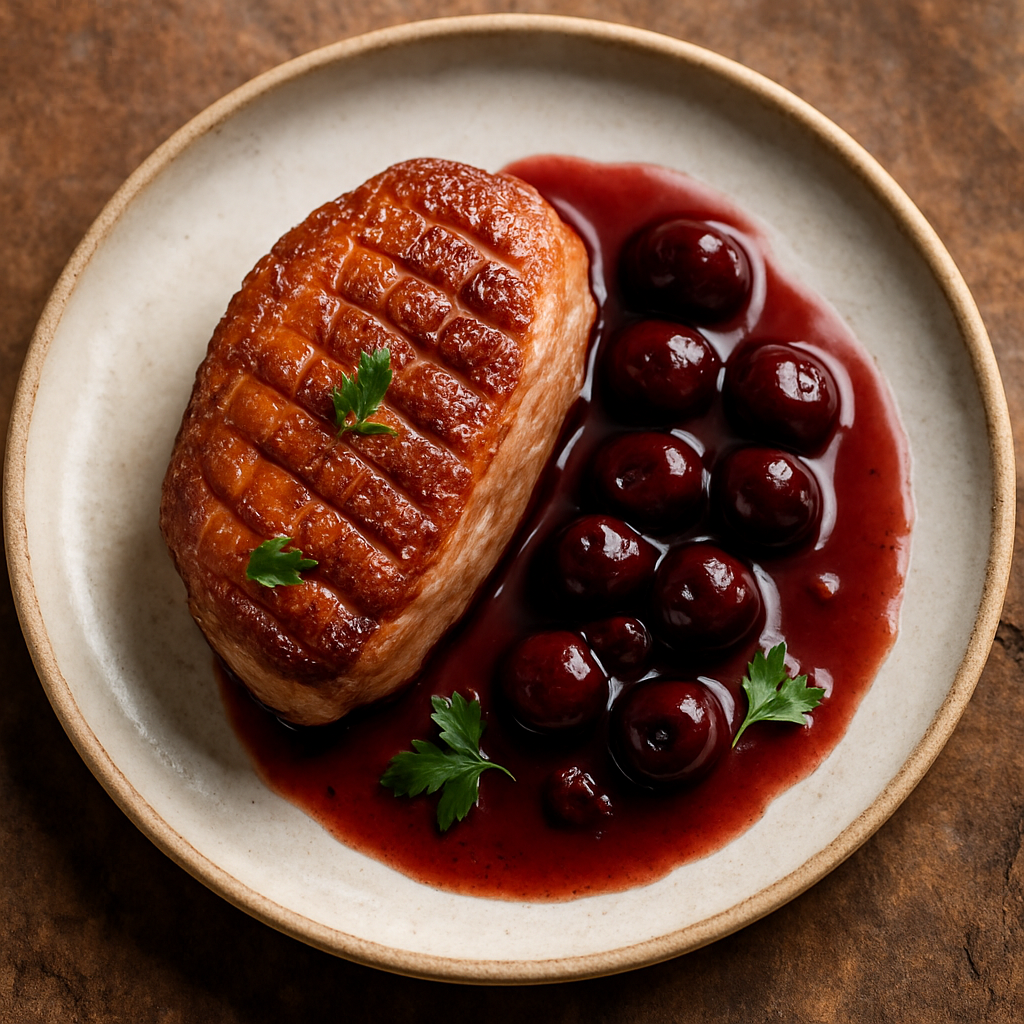
Magret duck breast is all about contrast: a crisp, lacquered skin against a blushing, tender interior, cut through by a glossy cherry sauce that balances fruit sweetness with the sharpness of red wine vinegar. The technique here is the cold-pan start — the key to rendering the thick fat layer without overcooking the meat. The cherry sauce is built directly in the same pan, picking up every bit of caramelised fond. Best served medium-rare, sliced on the diagonal, with the sauce spooned generously over.
Ingredients
Method
- 1
Score duck skin in a crosshatch pattern without cutting into the flesh. Season generously with salt and pepper. Place skin-side down in a cold skillet, then set over medium-low heat; cook for 14–16 minutes, draining fat every few minutes, until skin is deeply golden and most fat has rendered.
- 2
Flip duck and cook flesh-side for 4 minutes for medium-rare (65 °C internal). Rest on a wire rack 8 minutes.
- 3
Pour off most fat from the skillet, leaving 1 tsp. Sauté shallots 2 minutes. Deglaze with red wine; reduce by half. Add stock, thyme, cherries, sugar, and vinegar; simmer 8 minutes until sauce coats a spoon.
- 4
Remove from heat and whisk in cold butter cubes to finish and gloss the sauce. Slice duck breasts and serve with cherry sauce spooned over.
Cook's tips
- Start the duck in a cold, dry skillet — no oil needed. The gradual heat rise melts the fat layer slowly and evenly, giving you genuinely crisp skin without scorching it.
- Drain the rendered fat every few minutes into a heatproof bowl; too much pooling fat causes the skin to steam rather than sear. Save the fat — it keeps in the fridge and is excellent for roasting potatoes.
- Rest the duck on a wire rack, not a plate. A plate traps steam underneath and softens the skin you just spent 15 minutes perfecting.
- When finishing the sauce with cold butter, take the pan fully off the heat before whisking. Residual heat is enough to emulsify the butter — if the pan stays on the burner, the sauce will split and turn greasy.
- Taste the cherry sauce before serving and adjust the balance: a touch more vinegar sharpens it, a pinch more sugar rounds it out. Sour cherries vary considerably in acidity depending on whether they're fresh or frozen.
Swaps and variations
- fresh or frozen sour cherries: dried sour cherries (use 120 g, rehydrated in warm water for 10 minutes): the sauce will be slightly less bright and more jammy, but works well year-round. Avoid sweet cherries — the sauce will lack the acidity needed to cut through the rich duck fat.
- dry red wine: port wine for a sweeter, more concentrated fruit flavour, or simply replace with extra stock for an alcohol-free version — reduce the simmer time slightly as there is less liquid.
- chicken or duck stock: beef stock works and adds extra depth; avoid vegetable stock as it makes the sauce noticeably lighter in body and colour.
- caster sugar: honey (use 1 tsp) for a slightly floral sweetness, or omit entirely if your cherries are already sweet — taste the sauce as it reduces and adjust from there.
Storage
The sliced duck and cherry sauce keep separately in the fridge for up to 2 days — the skin will soften once stored, so keep the duck breasts whole if possible. Reheat the duck gently in a low oven (around 130 °C) wrapped in foil, or slice and warm briefly in the sauce. The cherry sauce reheats well in a small saucepan over low heat; whisk in a small knob of fresh butter to restore the gloss.
Frequently asked questions
- How do I know when the duck is medium-rare without a thermometer?
- Press the thickest part of the flesh side — it should feel like the base of your thumb when your hand is relaxed, with noticeable give but not completely soft. After resting, the centre should be a deep rose-pink when sliced.
- Can I cook the duck further than medium-rare?
- You can, but duck breast turns noticeably tougher and drier past medium (around 70 °C internal). If you prefer it more cooked through, add 2–3 minutes on the flesh side, but keep a close eye on it.
- My sauce is too thin — how do I fix it?
- Return the pan to medium heat and simmer for a few extra minutes without the butter, stirring occasionally, until it reduces to a consistency that coats the back of a spoon. Add the butter only once it has reached the right consistency.