Meal planning
Batch cooking for beginners, without the seven sad containers
3 min read
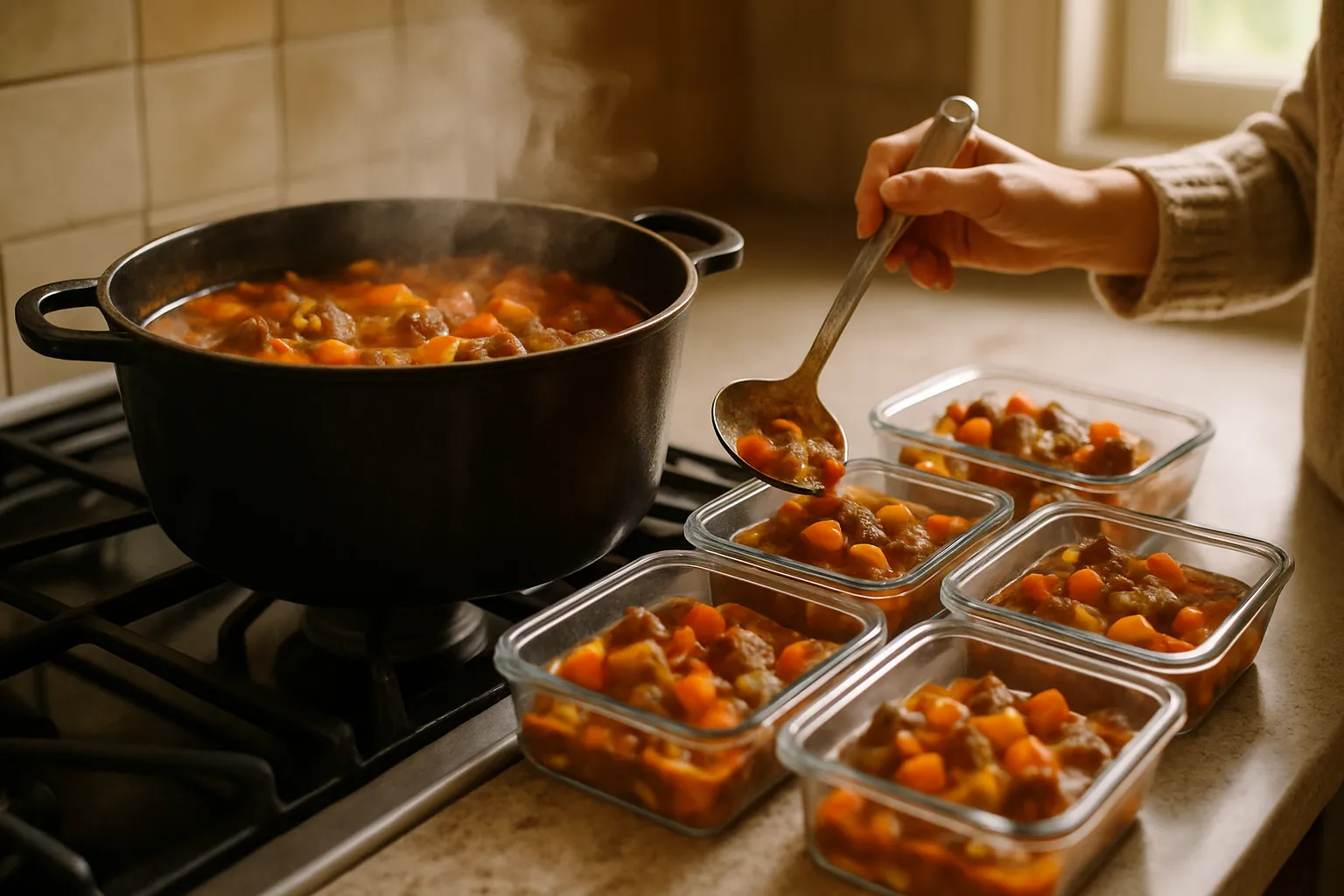
For many people, batch cooking conjures meal-prep influencers: seven identical containers of chicken and broccoli, prepared on Sunday, eaten with declining enthusiasm until Friday. That is indeed no way to live. But the core of batch cooking is something far more modest: if you are cooking anyway, cook for more than one occasion. Do that cleverly and you eat home-cooked food on weeknights in ten minutes without ever really cooking in the evening.
Double what you already make
The easiest form of batch cooking needs zero extra planning: simply double the dishes that lend themselves to it. A pot of soup, a stew, chilli, curry, pasta sauce: the extra effort of a double batch is close to nil (chopping takes a bit longer, simmering does not), but you gain two meals.
Half you eat today; the rest goes into the freezer, in portions. That last word matters: freezing one big container means defrosting everything at once later. Two- or four-person portions, frozen flat in freezer bags, defrost quickly and stack well.
Note that not everything scales linearly when doubling: spices and heat are better multiplied by one and a half and then adjusted by tasting, and a double quantity in the same pot takes longer to come to temperature. More on that in the guide on scaling recipes.
Which dishes work and which do not
Rule of thumb: anything wet and braised gets better or stays the same; anything crisp or just-cooked gets worse.
- Excellent: soups, stews, curries, ragù and other pasta sauces, chilli, dal, meatballs in sauce. Many of these are actually better after a day.
- Fine: cooked grains (rice, quinoa, pearl barley), pulses, roasted vegetables (they lose some texture but stay useful as a building block).
- Poor: fried fish, steak, anything deep-fried, pasta already mixed through sauce (cook pasta fresh, store only the sauce), salads and fresh garnishes.
Respecting this divide avoids the biggest disappointment of new batch cooks: food that is "okay, I guess". Okay is not enough to keep the habit going; it has to be simply good.
Components beat complete meals
The advanced form of batch cooking is not freezing more complete dishes, but components. A stock of cooked chickpeas, a jar of roasted peppers, a tub of tomato sauce with no committed flavour direction: components get combined on the night itself into something that feels fresh. The same tomato sauce is pasta on Monday, shakshuka on Wednesday and a pizza base on Friday.
This solves the real problem of classic meal prep: predictability. Nobody knows on Sunday what they will fancy on Thursday. Components keep that choice open and still halve the cooking time.
Label it or lose it
The freezer is where good batch-cooking intentions go to die. An unlabelled container becomes "something brown, probably 2025" within three weeks. Write on every portion what it is and the date, however certain you are that you will remember. You will not remember.
Also keep a simple overview of what is in the freezer, and cross off what comes out. A note on the freezer door will do, and it saves more than searching: it turns the freezer stock into a real option when planning your week. "Thursday: chilli from the freezer" is the easiest menu decision in existence.
Rough freezer timings: soups and stews are at their best for two to three months, sauces likewise, cooked grains about a month. Everything stays safe longer, but taste and texture decline; the dates are there to keep it enjoyable.
Start with one pot
As with every kitchen habit: starting small wins. Not four hours of Sunday cooking, but one double pot this week of something you were making anyway. If in a month there are consistently three or four portions in the freezer, you have built, at no extra effort, a safety net for exactly those evenings when cooking is not going to happen. That safety net, not the seven containers, is what batch cooking is really for.