Adapting recipes
Low-carb cooking: practical substitutions per ingredient
3 min read
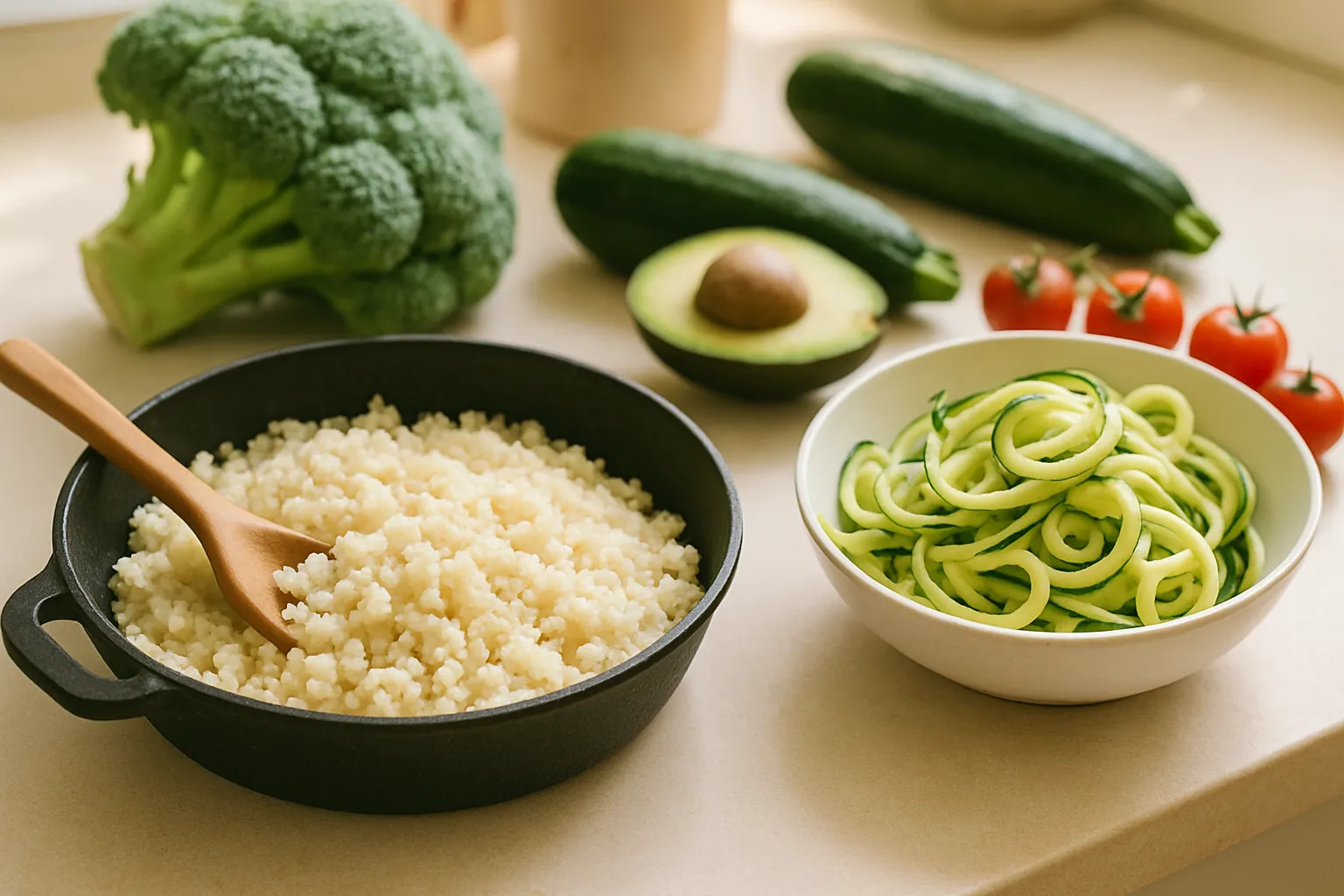
If you want to eat fewer carbohydrates, the usual advice is to "just find low-carb recipes". That is the long way round: replacing your entire repertoire with unfamiliar dishes. The faster route is adapting your own recipes, because in most dishes the bulk of the carbohydrates sits in one or two ingredients: the rice underneath, the pasta through it, the potatoes beside it. Swap those wisely and the dish otherwise stays your dish.
Below, the usual swaps per staple, with honest expectations attached, because "tastes exactly the same" is rarely true.
Rice
Cauliflower rice is the standard swap: blitz cauliflower finely (or buy it ready-done) and stir-fry for two to three minutes. Under a curry or beside a stew it does exactly what rice does: absorb sauce. Do not expect a neutral flavour; cauliflower stays mildly present. Broccoli rice is its sturdier, greener sibling.
The main mistake: cooking cauliflower rice like rice. It does not need to cook through, only to get hot and just tender. Two minutes too long and you have purée.
Pasta
Honesty first: nothing replaces pasta one-to-one. The usable options, by situation:
- Courgette ribbons (courgetti) with light sauces. Raw or warmed for thirty seconds; boil them and you have soup. Salt them lightly beforehand and pat dry.
- Cabbage strips with creamy or hearty sauces; pointed cabbage in ribbons, briefly stir-fried, has genuine bite.
- For lasagne: slices of courgette or aubergine instead of sheets, grilled briefly first so they shed moisture.
Expect more moisture in the final dish with all of these swaps, so make the sauce a little thicker than usual.
Potato
For mash, cauliflower or celeriac is the classic: boil, let it steam off thoroughly (the crucial step) and purée with butter. Celeriac comes closest to potato mash in body and has a gentle, nutty flavour. For oven dishes, swede, celeriac and pumpkin make good cubes; they roast beautifully and sweeten at the edges. Replacing chips remains the weakest swap; swede fries are decent, but anyone expecting chips will be disappointed. Better: choose a dish where chips were never the star.
Bread, wraps and breading
For wraps, large lettuce leaves (little gem, iceberg) are surprisingly good with savoury fillings; sturdy, fresh, and they leak less than you would think. Replace breadcrumbs in meatballs with grated Parmesan or almond flour, and as a crunchy topping on gratins, ground almonds with a little cheese work excellently. Supermarket bread substitutes vary wildly in quality and sometimes contain surprising amounts of carbohydrate; reading the label remains half the work.
Sugar and thickening
Sauces and dressings often hide sugar; usually it can simply go, or drop to a quarter, without anyone noticing. It was mostly there to mask industrial acidity your fresh version does not have. For thickening sauces (normally flour or cornstarch): reduce longer, whisk in a knob of cold butter, or stir in a spoonful of cream cheese. For frequent use: a pinch of xanthan gum thickens strongly, but dose carefully.
Think in dishes, not only ingredients
Some dishes are structurally better suited to low-carb than others. Stir-fries, curries, stews, salads with a solid protein, oven dishes with vegetables and cheese: the swap there is small. Pizza, risotto and bread are the hard cases; their low-carb versions are essentially different dishes, and it is fine to accept that. Pick your battles.
If you adapt your own recipes, save the adapted version next to the original, including what you swapped and how it turned out: the same working method as when making a recipe vegetarian. Within a few months you build your own low-carb repertoire out of dishes you already knew you loved, which is exactly why this route beats a stack of new internet recipes.
To be clear, finally: this is a cooking guide, not dietary advice. How many carbohydrates suit you is personal; anyone overhauling their diet for medical reasons should do so with a doctor or dietitian. The kitchen only really helps when the rest is right.