Cookbook & organisation
Bookmarks, screenshots, notebooks: why a digital cookbook wins
3 min read
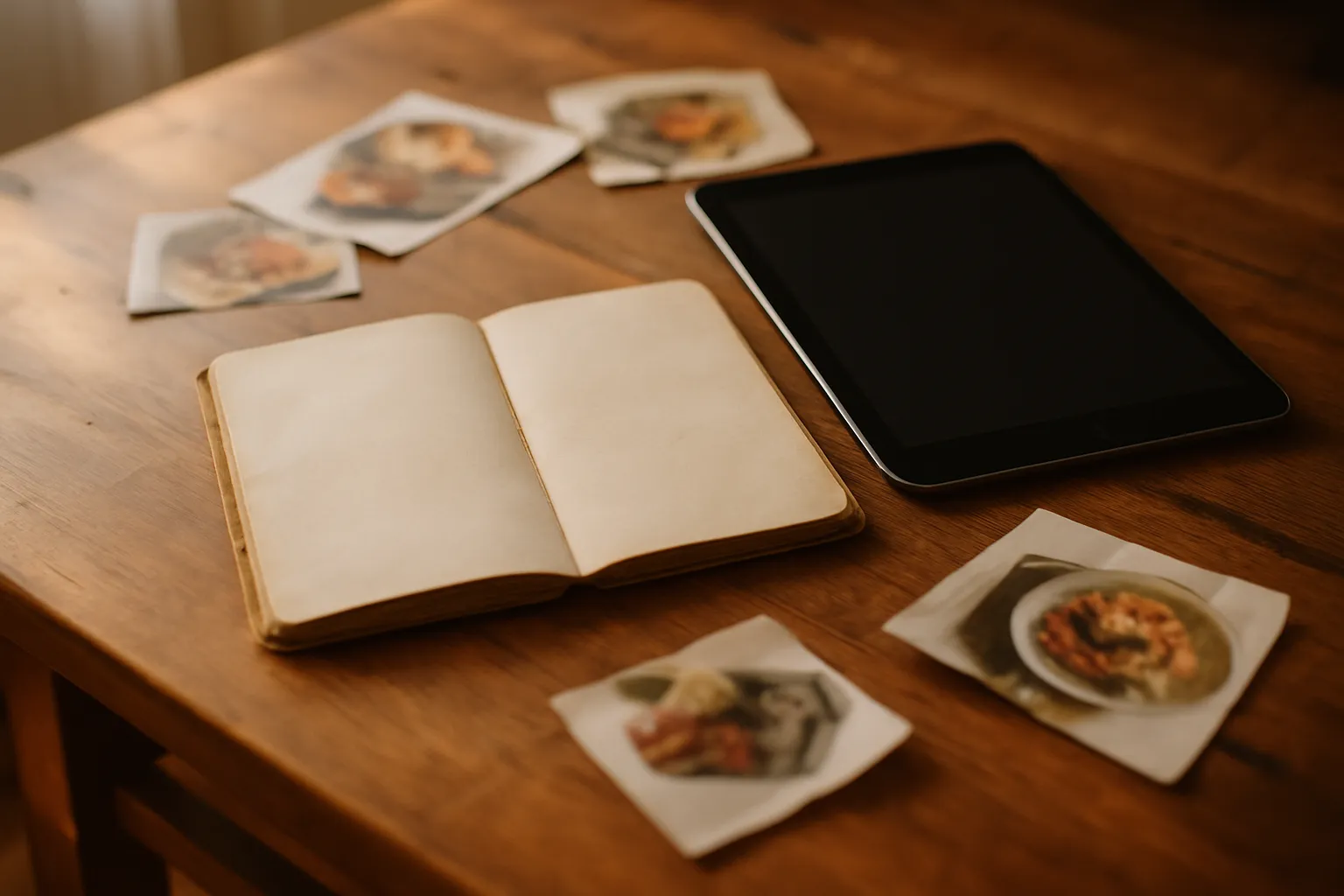
Ask ten home cooks where their recipes live and you get ten different answers, which suspiciously often begin with "well, everywhere really". A notebook from years ago, a drawer of torn-out magazine pages, browser bookmarks from three phones ago, an Instagram collection of saved videos, and screenshots. So many screenshots.
Every method started for good reasons. It pays to line them up seriously, because once you understand why a method fails, you choose your next one deliberately.
The notebook
The handwritten notebook is the romantic favourite, and not without reason: it is yours, it outlives every app, and it grows more beautiful as it ages. The stains on the apple pie page tell their own story.
But the notebook does not scale. After recipe forty you lose the overview, searching means leafing through, and adjusting means crossing out until the page is illegible. And there is only one copy: one lost moving box or one water leak and half your cooking history is gone in a single blow. The notebook deserves a place of honour, but as an archive it is fragile.
The bookmark folder
Saving online recipes as bookmarks feels logical: the recipe is already on the internet, why copy it? Until two years later you click the link and land on a 404, or on a page now buried behind a cookie wall, three video ads and a newsletter pop-up. Websites change, disappear and move recipes; your bookmark points to a location, not to the content.
Bookmarks have a second problem: they store no context. The fact that you set the oven ten degrees lower and use half the sugar is written down nowhere. Every time you cook the dish, you start again from the website's version instead of your own.
The screenshot collection
We wrote a separate guide about the camera roll as a recipe archive, so here is the short version: screenshots are fantastic for capturing something and useless for finding it again. No search, no structure, no way to adapt or scale. It is the digital version of the drawer full of magazine clippings, minus the charm.
What a digital cookbook does differently
A real digital cookbook, whether an app or a well-kept documents folder, does three things none of the methods above can.
First: it makes recipes searchable the way cooks think. By ingredient, when there is leftover chicken that needs using. By cooking time, when it is Tuesday and everyone is hungry. By label, when your in-laws are coming and one of them is vegetarian.
Second: it stores your version. Recipes are not laws but starting points, and the adjustments you make are precisely what turns a recipe into yours. A digital cookbook where you can tweak, annotate and rescale portions grows with you instead of fossilising.
Third: it will still be there in ten years. Not dependent on a single paper copy, not dependent on a website that moves its recipes behind a paywall. What you put in stays yours.
The switch does not have to be a project
The misconception that stops people: you do not have to migrate your whole archive first. Work the other way round. Agree with yourself that every recipe you want to keep from now on goes to the new place, and pull from the old archive only what you are actually going to cook. After three months, your real repertoire, the recipes you genuinely make, sits neatly together, and the rest can retire.
Grandma's notebook does not need to go anywhere, by the way. Transfer the recipes you cherish, and keep the notebook itself for what it is: an heirloom. The best reason for a digital cookbook is not that paper is bad, but that the contents are too valuable to entrust to one fragile copy.