Cooking from your pantry
Building a pantry that actually works
3 min read
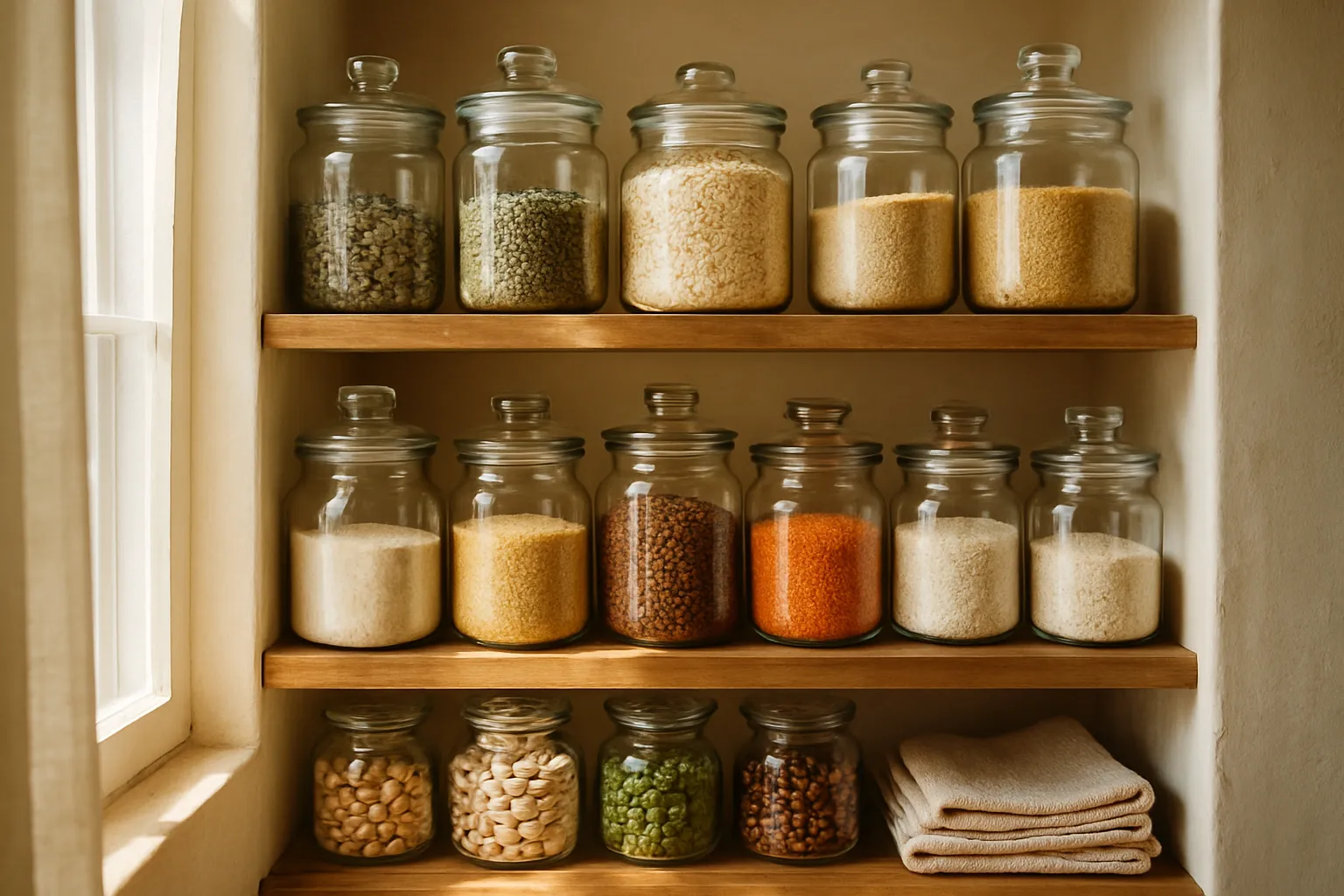
Hundreds of "essential pantry" lists circulate online, and they all share the same flaw: they describe someone else's kitchen. Follow such a list obediently and after one supermarket trip you own a shelf of capers, tahini and three kinds of vinegar, half of which gets thrown away unopened two years later. A working pantry is not built from a list but from what you actually cook.
Still, there is a genuinely shared core, plus a method for filling in the rest yourself.
The core almost every kitchen runs on
These categories return in nearly every cooking pattern. Think in roles, not brands:
- Fillers: pasta, rice, couscous or bulgur, potatoes, bread in the freezer. Two or three kinds is enough; six kinds of rice is collecting, not stocking.
- Protein from tin and freezer: chickpeas, lentils or beans (stock up generously; this is the most used reserve), tinned tuna or other fish, eggs, something from the freezer.
- Flavour foundation: onions and garlic, tomato purée and tinned tomatoes, stock, olive oil plus a neutral oil, soy sauce, vinegar (one good one is enough to start), mustard.
- Spice base: pepper, cumin, paprika, chilli flakes, oregano or thyme, bay, cinnamon or curry powder to taste. Six to ten jars you genuinely use beat thirty gathering dust; the spice guide helps with choosing.
- Freshness that keeps: lemons (they last for weeks), yoghurt, frozen herbs.
With this core, most pantry dishes stay within reach at all times, and that is precisely what a pantry is for: not completeness, but always being able to make a meal.
Build the rest from your own recipes
Now the personal part, the step the internet lists skip. Take the ten to fifteen recipes you cook most often (with a well-kept cookbook you can read this off directly) and note which shelf-stable ingredients keep returning. If you cook Italian weekly, then anchovies, capers and good olive oil are pantry staples for you. If your week revolves around stir-fries, then sesame oil, rice vinegar and oyster sauce are. For someone else, the very same jar is dead stock.
The rule that follows: something earns a fixed pantry place only once it has been in your pan two or three times in recent months. New ingredients you simply buy once, for one recipe; promotion to the pantry comes after proven service.
Keeping stock is a system, not a shopping trip
A pantry is not a one-off purchase but a cycle, and the cycle runs on one habit: the moment you take the last or second-to-last of something, it goes on the shopping list. Not when it is finished, but when it is nearly finished; that way the reserve is there before you need it. This is the same running list from the shopping guide, and it is why people with a good pantry rarely need to "pop to the shop".
Two supporting habits complete it. First, visibility: one fixed place per category, small jars at the front, and never open a second of anything before the first is empty. Second, the seasonal check: walk through the cupboard once a quarter. Whatever has stayed closed for half a year apparently does not belong to your cooking pattern; use it up deliberately or demote it from the standing stock.
Start small and let it grow
The temptation is to "finish" the pantry in one Saturday. Take it slower: get the core above right first, and let the personal shell grow around it over two or three months based on what you cook. A pantry built this way has no dead shelves, no duplicate jars and no discarded best-before casualties — only ingredients that are there because they get used. That is the whole difference between a pantry and a museum of good intentions.