Cooking from your pantry
What can you cook with only pantry staples?
3 min read
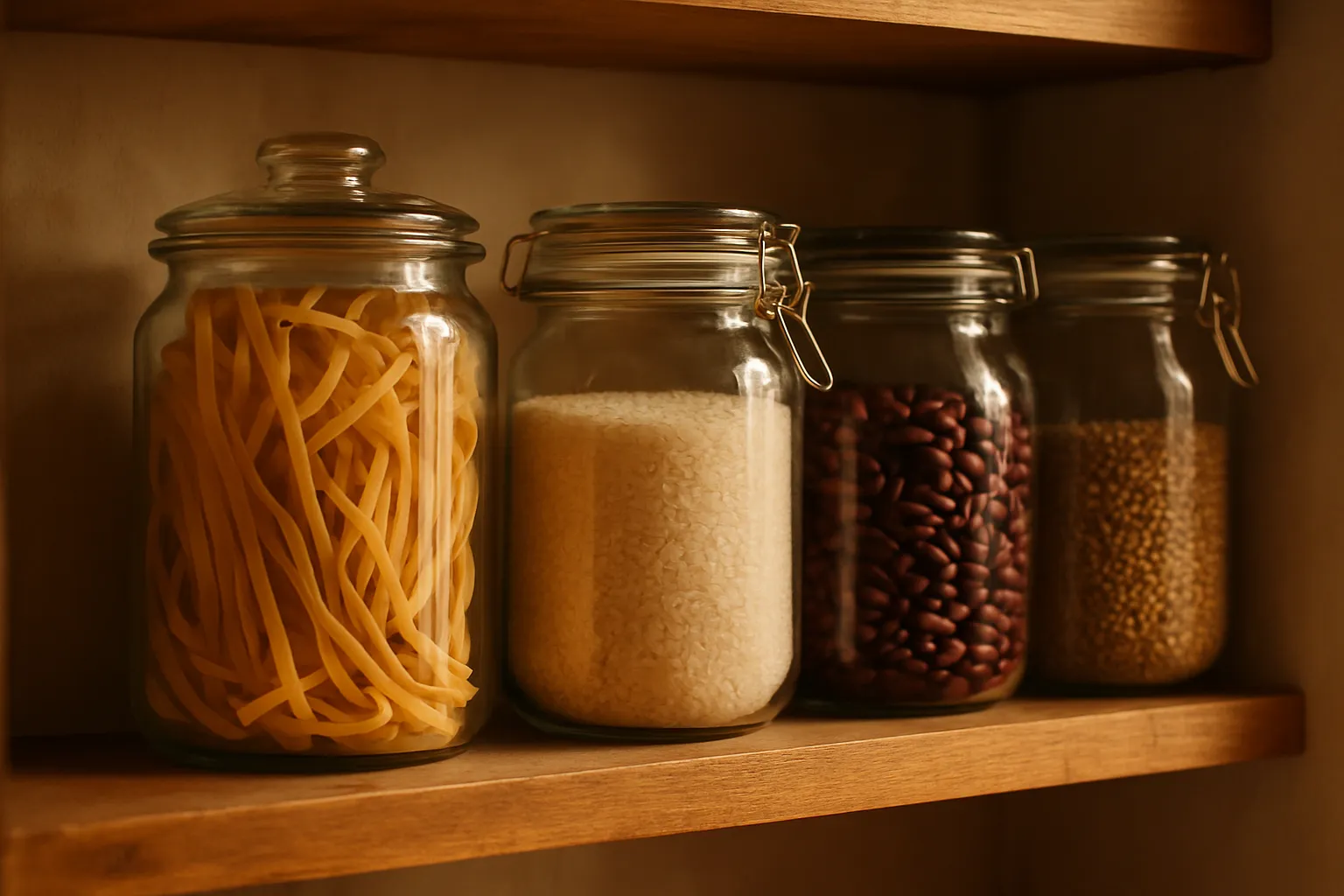
It is half past six, the fridge holds one lonely carrot, and nobody did the shopping. For many households this is the delivery-app moment. But with a reasonable pantry you are twenty minutes away from a real meal; the only thing missing is the repertoire. These are the dishes that come almost entirely from the cupboard, plus the formulas behind them.
The cupboard classics
Some of the world's best dishes were born in exactly this situation: cooks who had to make something from what was there.
- Pasta aglio e olio: pasta, garlic, olive oil, chilli flakes. Proof that four pantry ingredients can be a dish. A tin of anchovies or some lemon makes it bigger.
- Pasta with tuna and tomato: tinned tomato, tinned tuna, onion, and whatever capers or olives are around.
- Shakshuka: tinned tomato, onion, garlic, paprika and cumin, eggs poached on top. Bread on the side if there is any.
- Dal: red lentils, onion, garlic, turmeric and cumin, twenty minutes of simmering. With rice a complete meal, and it does not get cheaper.
- Fried rice: rice (yesterday's is best), egg, soy sauce, and any vegetable or leftover that presents itself. Frozen peas are gold here.
- One-tin soup: white beans or chickpeas, stock cube, garlic, bay; blend partly and there is soup. An old cheese rind simmered along makes it rich.
Know these six by heart and you will get through any empty-fridge evening. The pattern behind them is even more useful than the list.
The formula: base + protein + flavour-maker + freshness
Nearly every pantry dish follows the same construction. A filling base (pasta, rice, couscous, bread, potatoes). A protein that keeps (eggs, tinned pulses, tinned fish, frozen mince). A flavour foundation (onion and garlic, plus the jars: soy sauce, tomato purée, curry paste, harissa, stock). And something fresh to lift it out of cupboard territory: lemon juice, vinegar, frozen herbs, yoghurt.
Keep all four roles in the house and you can always make something; miss one and you taste it immediately. The last category is the one people forget: the difference between "emergency meal" and "actually ate well" is usually the acid at the end, exactly as described in the guide on seasoning.
The freezer counts as pantry
The cupboard gets all the attention, but the freezer matters just as much on these evenings. Frozen peas and spinach are fully-fledged vegetables that keep for months; frozen bread rescues every soup night. And if you sometimes cook portions ahead, the freezer already holds half a meal plan.
That lonely carrot from half past six? Roughly chopped and fried along with the onion: nearly every pantry dish tolerates the addition of whatever fresh stragglers remain. That is how pantry cooking and using up leftovers work together instead of side by side.
Know your own cupboard
The formula only works when you know what is there, and this is where practice fails: half the stock has drifted out of sight behind the other half. Two habits help. Arrange the cupboard so everything is visible (tall things at the back, small jars at the front, one place per category). And walk through it once a month, if only to know there are still three tins of tomatoes and no rice.
For the creative step, from "this is what I have" to "this is what I'll make", digital tools exist as well: in Recettino you enter what is in the house at "What can I cook right now?" and get matching dishes suggested. But with or without an app, the goal is the same. A pantry is not storage for someday; it is a menu waiting for the evenings when everything went differently. How to build such a pantry without wasting money is covered in the guide on pantry staples.