Adapting recipes
Lighten a recipe without anyone noticing
3 min read
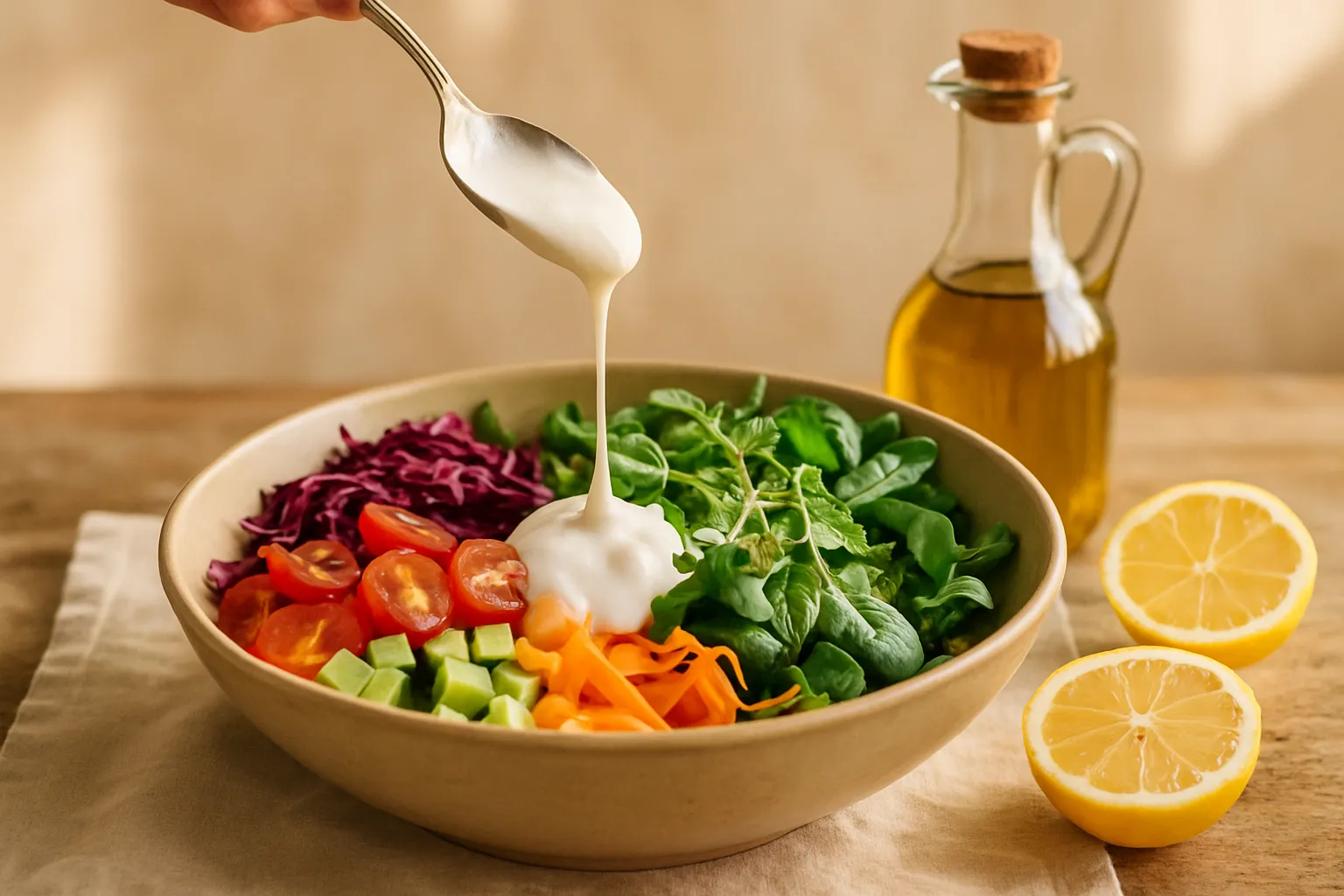
There are two ways to lighten a dish. One produces food everyone can tell is missing something: the light version, the compromise. The other goes unnoticed, because it intervenes where the original used more than it needed. The difference lies in knowing where the heaviness sits and what it is doing there.
Find the big spenders first
Before replacing anything, walk through the recipe and find where the calories concentrate. It is usually a short list: the oil or butter things are fried in, cream or coconut milk in the sauce, cheese, sugar, and the carbohydrate base (which has a guide of its own). One generous pour of olive oil easily carries more calories than the entire pan of vegetables under it.
The art is asking, per big spender: what is this ingredient doing here? Fat carries flavour and mouthfeel, sugar balances acidity, cream binds and softens. Know the function and you can substitute precisely instead of crossing things out.
Fat: measure instead of pour
The most invisible saving of all: do not pour cooking oil from the bottle, measure it with a spoon. Free-pouring easily lands at three to four tablespoons where one was needed; you will not taste the difference, because above a certain minimum, extra frying fat does little for flavour. A good non-stick pan helps more here than any light product ever will.
Where fat genuinely carries flavour, at the end, relocate it rather than cut it: half a tablespoon of good olive oil tasted on top of the soup does more than three tablespoons hidden inside it. Fat you can see and smell counts more in the experience than fat that is processed in.
Cream and cheese: less, but placed better
For creamy sauces and soups, the switch from double cream to single, or from cream to whole yoghurt or crème fraîche (added off the boil, or it splits), is usually imperceptible. Even stronger is body from the dish itself: blending part of the soup, cooking a potato along, or blitzing white beans through the sauce gives richness without cream.
With cheese, the flavour rule applies: the stronger the cheese, the less you need. Thirty grams of mature cheese or Parmesan brings more flavour than eighty grams of mild. Grate finely and scatter visibly on top at the end, instead of a thick layer melting away inside the mass.
Sugar: step down gradually
In savoury dishes (pasta sauce, dressings, marinades), sugar can usually drop by half or vanish entirely; it was often there to mask industrial acidity your fresh version does not have. In baking, sugar is structural and needs more respect, but nearly every everyday home recipe tolerates a quarter less without noticeable difference. Go in steps: a quarter off each time until you taste the difference, then one step back. Note the outcome in the recipe, or you will run the same experiment again next year.
Load up the rest of the plate
Lightening is not only removing; it is also shifting the ratio on the plate. One and a half times the vegetables in the curry, half the mince replaced by lentils or finely chopped mushrooms (the tricks from the vegetarian guide work just as well here), a bigger salad next to a smaller main. The plate stays full and the eating experience stays the same, while the density per bite drops. This is the intervention with the biggest effect and the smallest noticeability.
What not to do
Everything at once. A dish with the fat halved, the sugar cut, the cream swapped and the cheese economised is a different (and sadder) dish. Pick one or two interventions per recipe, taste the result honestly, and save the adapted version separately next to the original, so both exist: the celebration version and the Tuesday version. That is not bookkeeping for its own sake; it is how a recipe adapts to your kitchen instead of the other way round. Some evenings call for the celebration version, and you need it still to be there.