Cooking from your pantry
Leftover vegetables: 10 ways to use them
3 min read
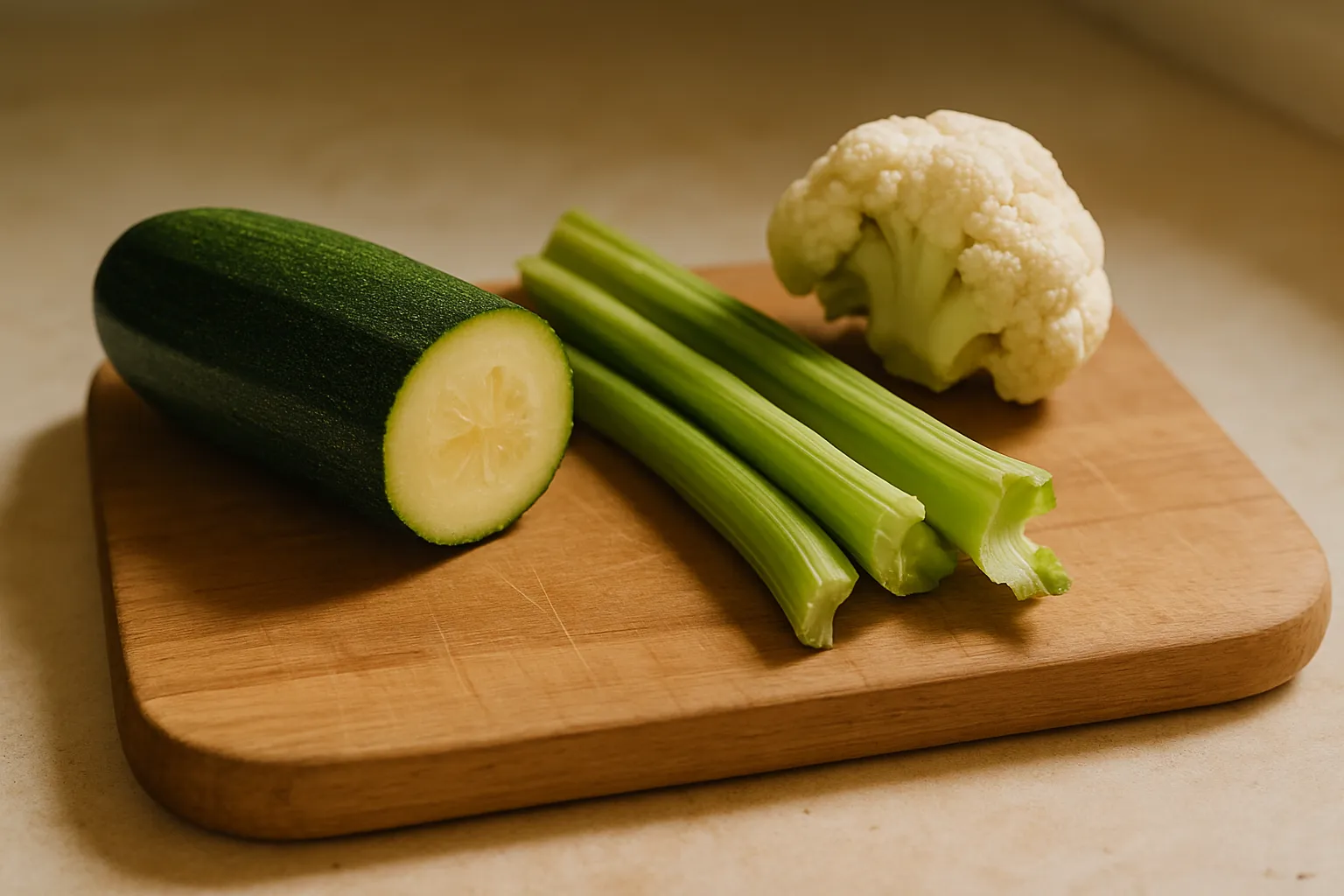
Every vegetable drawer has them: Tuesday's half courgette, three sticks of celery from a recipe that needed two, the carrot that was too much for the soup. Each too small for a dish, together too much to ignore, and in five days all of them in the bin. What is missing is not willpower but a destination. Below are ten fixed routes; master three of them and hardly any vegetable remnant will be left over.
- The anything-goes soup. The royal route: sweat an onion, add the leftover vegetables, pour on stock, simmer twenty minutes and blend. Almost any combination works, especially with a flavour anchor (curry paste, smoked paprika, or a cheese rind simmered along). Vegetables gone limp are no objection at all here; they are becoming purée anyway.
- The frittata or tortilla. Briefly fry the leftover vegetables, pour over beaten eggs, lid on, low heat. A full meal in fifteen minutes, warm or cold. Works with almost everything except watery lettuce.
- Stir-fry Friday. One night a week when the wok eats whatever is left, with rice or noodles, garlic, ginger and soy sauce. Cut hard vegetables (carrot, cabbage) fine and soft ones (courgette, pak choi) coarse, and everything cooks evenly.
- Roasting as a side. Sturdy leftover vegetables in rough chunks, oil, salt, hot oven (220 degrees), twenty to thirty minutes. Roasting turns a sorry quarter cauliflower into the best part of the meal. Directly usable in the leftover formulas later in the week.
- The pasta-sauce thickener. Nearly any vegetable can go finely chopped or grated into the tomato sauce: carrot, courgette, pepper, celery, even a handful of spinach at the end. The sauce gets fuller and nobody at the table objects.
- Quick pickles. Briefly warm vinegar, water, sugar and salt (roughly 1:1 vinegar to water with a tablespoon of sugar and a teaspoon of salt per 250 ml), pour over thinly sliced leftover vegetables, jar into the fridge. Red onion, carrot, cucumber, radish and cauliflower come out better after a day than they went in, and it keeps for weeks.
- Blanch and freeze. The pause button: boil briefly, rinse cold, pat dry, freeze. Especially worthwhile for sturdy vegetables (broccoli, beans, carrot) destined for later soups or stir-fries. Freezing raw also works for many vegetables, but costs texture.
- The stock bag. Keep a bag or box in the freezer for peels, stalks, ends and too-small remnants: onion skins, leek greens, celery leaves, mushroom stems. When the bag is full, that is a pot of stock: cover with water, simmer gently for an hour, strain. Free, and better than a cube. (Skip bitter brassicas and potato peels; they make the stock cloudy or bitter.)
- Grate it into the mince. Carrot or courgette, finely grated and squeezed, disappears invisibly into meatballs, burgers and meat sauces. It keeps them juicy too; the same trick that lightens a dish, deployed as a clean-up operation.
- The meal salad with one warm element. Limp lettuce is beyond saving, but nearly all other vegetable remnants can go raw-grated or roasted into a salad with something warm beside it: a fried egg, roasted chickpeas, a remnant of chicken. A dressing with some mustard and honey pulls loose ends together.
The common thread through all ten: decide the route the moment the remnant is created, not five days later. "This half courgette goes into the wok on Friday" is a plan; "we'll see about that one" is the bin. If you keep a loose cooking plan, the remnant can be attached to a night immediately, and if you want to know what a few loose ingredients could become, you can nowadays simply look it up based on what is there. The vegetable drawer should not be a waiting room; it is just stock with a shorter deadline.