Cooking from your pantry
Cutting food waste: a practical approach
3 min read
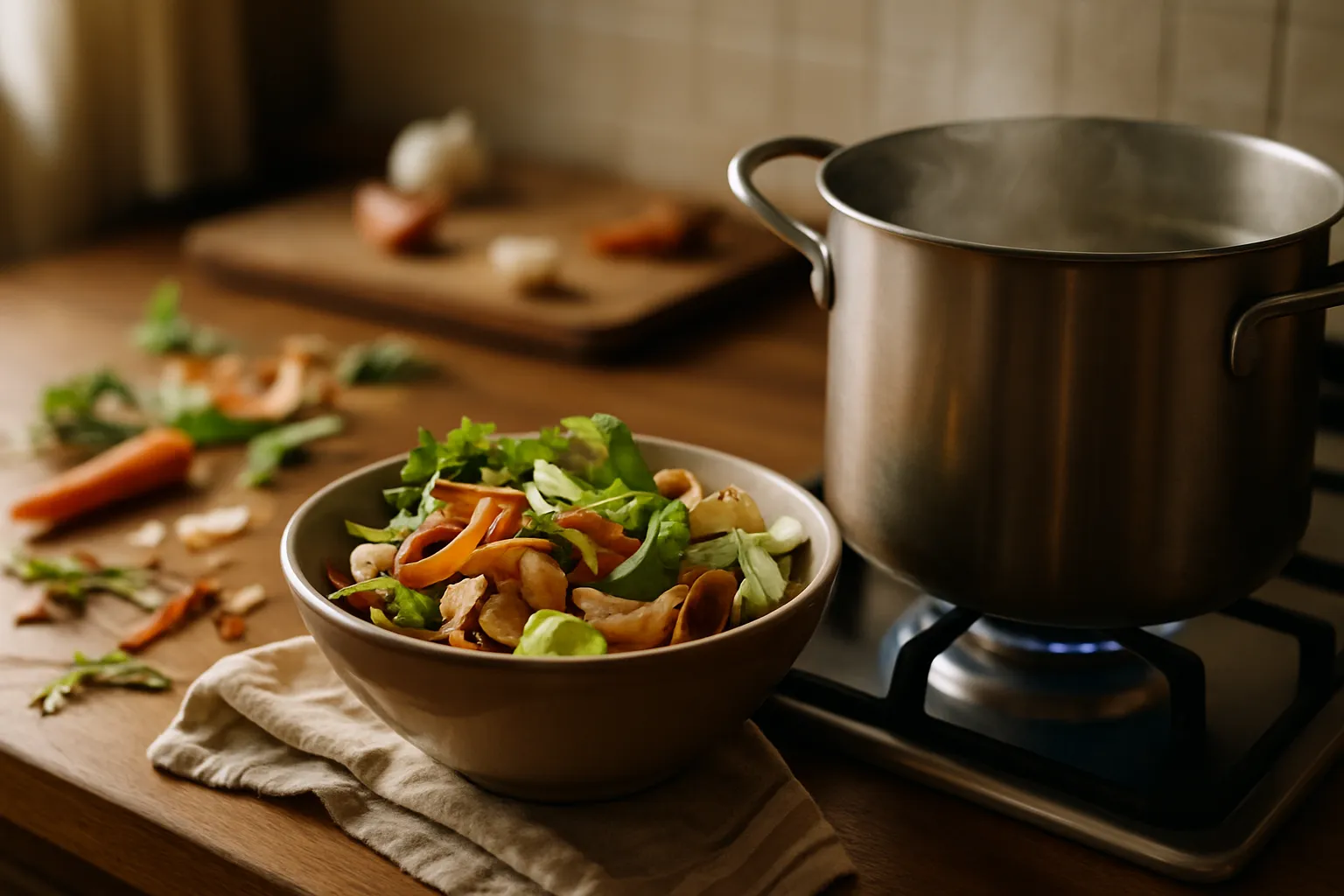
Almost nobody throws food away on purpose. Waste is not a choice but the sum of small accidents: the bag of salad that slipped out of sight behind the milk, the leftover that was going to be eaten "tomorrow", the second lettuce that looked so sensible on offer. Reducing waste does not require becoming a better person; it requires fixing a few system errors.
Waste starts in the shop
The biggest win sits before the fridge: buying too much. The two most notorious mechanisms are the deal without a plan (two-for-one is only a bargain if both get eaten) and shopping without knowing what you will cook, which makes you take all sorts of things "just in case".
The medicine is as unspectacular as it is effective: a shopping list based on a cooking plan. Buy what will be cooked and there is almost nothing left at the end of the week. That is not a matter of discipline; the decision has simply been moved to a moment when you could still think clearly.
The fridge: visibility is everything
Inside the fridge one law rules: what you do not see, you throw away. Practical translations:
- Give perishables a fixed, visible spot. One shelf at eye level for everything that must go this week; never put fresh behind long-life.
- New behind, old in front, at home too. The supermarket principle works just as well in your own fridge.
- Leftovers in transparent containers. An opaque tub is a time capsule; glass or clear plastic actually gets opened. What to do with those leftovers has a guide of its own.
- Know your fridge's zones. The door is warmest (fine for sauces, bad for milk), the shelf above the vegetable drawer the coldest.
Read dates as they are meant
A surprisingly large share of waste comes from confusing two labels. Use by appears on perishable goods and is a safety boundary: take it seriously. Best before is a quality promise, not an expiry date: many products are perfectly fine afterwards, sometimes for weeks or longer. Dried pasta, rice, tins, much dairy: looking, smelling and tasting is a legitimate inspection for best-before goods. Throwing away unopened yoghurt because the best-before date was yesterday mostly means throwing away good food.
The freezer is a pause button
Much waste is a timing problem: the food was fine, the moment never came. Nearly everything that will not be eaten this week can go into the freezer, and far more than people think: bread (sliced), cheese (grated), fresh herbs (chopped, in oil, in ice-cube trays), ripe bananas (for baking), even a splash of leftover wine (in cubes, for sauces). Nearly-limp vegetables do not need binning either: soup or one of the ten leftover-vegetable routes is exactly what they exist for.
The most important freezer rule: label everything with name and date, otherwise you merely postpone the waste by six months.
Measure one week, and you will know where it hides
To improve seriously, write down for one week what gets thrown away, including the reason. Not to feel guilty, but because the pattern differs per household: for one it is bread crusts, for another the vegetable drawer, for a third the oversized pot nobody wants as leftovers. The solution differs accordingly: buy smaller loaves and freeze, plan one vegetable night a week, freeze half of every big pot by default.
And do not expect zero. A household with no waste at all does not exist, and chasing the last ten percent costs more energy than it returns. The goal is breaking the pattern in which discarding is the default outcome of not paying attention. Plan what you buy, see what you have, and use the freezer's pause button: three habits of less than five minutes each that capture most of the win.